How to Avoid Fake Job Offers in Saudi Arabia and the Gulf: A Safety Guide for Beginners
How to Avoid Fake Job Offers in Saudi Arabia and the Gulf: A Safety Guide for Beginners
Finding a job in Saudi Arabia or the Gulf can be an exciting opportunity, especially for beginners, students, fresh graduates, and people looking for better income. However, the growth of online job platforms, social media groups, and fast recruitment messages has also created space for fake job offers and recruitment scams.
A fake job offer can waste your time, steal your personal information, or even lead to financial loss. Some scammers use real company names, attractive salaries, urgent hiring messages, or fake interview forms to make the offer look professional.
This guide explains how beginners can recognize fake job offers, protect personal documents, and apply for jobs safely in Saudi Arabia and the Gulf.
Why Fake Job Offers Are Common Online
Many job seekers now search for work through websites, WhatsApp groups, Telegram channels, Facebook pages, LinkedIn, and online job platforms. This makes job searching faster, but it also makes it easier for scammers to publish fake opportunities.
Fake recruiters often target people who urgently need work. They may promise a high salary, fast visa processing, free accommodation, or guaranteed hiring. In many cases, they ask for money before the job is confirmed.
Real employers usually follow a clear hiring process. They explain the job title, company name, location, salary, contract details, and interview steps. Fake recruiters often avoid clear answers and push applicants to act quickly.
Warning Signs of a Fake Job Offer
A fake job offer may look attractive at first, but there are common warning signs that job seekers should notice.
Be careful if the recruiter:
Asks you to pay money before getting the job.
Promises guaranteed hiring without an interview.
Offers a very high salary for a simple beginner role.
Uses only WhatsApp without official contact details.
Refuses to share the company website or office location.
Sends messages with many spelling errors.
Asks for passport or ID copies too early.
Pressures you to decide immediately.
Uses a free email address instead of a company email.
Avoids giving a written contract.
Claims that visa or processing fees must be paid directly to them.
If you see more than one of these signs, stop and verify the offer before sending anything.
Never Pay Money for a Job Offer
One of the most important rules is simple: do not pay money to get a job.
Some scammers ask for:
Registration fees
Visa processing fees
Medical fees
Training fees
Document verification fees
Uniform fees
Application fees
A real employer should explain official costs clearly and should not ask job seekers to transfer money to personal accounts. If someone asks you to pay quickly to “secure your position,” this is a serious warning sign.
Before paying anything, verify the company, check official communication channels, and ask for written proof.
Check the Company Name Carefully
Some fake job ads use the names of real companies to look trustworthy. A scammer may copy a company logo, job title, or website style to make the offer appear official.
Before applying, search for:
The company’s official website
The company’s LinkedIn page
Official career page
Office address
Official email domain
Phone number
Recent job announcements
If the job is real, it may appear on the company’s official career page or verified recruitment channels.
Be careful if the recruiter’s email does not match the company domain. For example, a professional company is more likely to use an official business email instead of a random free email account.
Be Careful With WhatsApp Job Offers
WhatsApp can be useful for communication, but many fake job offers also spread through WhatsApp groups. A message may say “urgent hiring” or “limited seats available” and ask applicants to send documents quickly.
Before trusting a WhatsApp job offer, ask:
What is the company name?
Where is the job location?
What is the official website?
What is the recruiter’s full name?
Is there an official email address?
Will there be an interview?
Is there a written job offer?
What are the salary and contract terms?
If the person refuses to answer or becomes angry, do not continue.
Protect Your Personal Documents
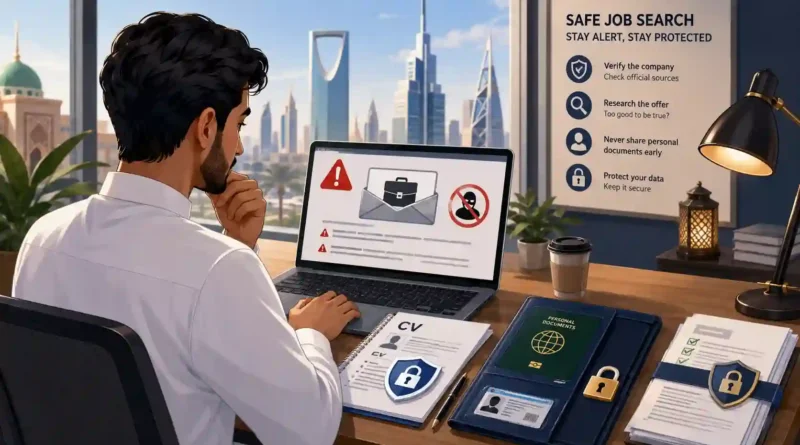
Job seekers should protect personal documents carefully. Your passport, national ID, iqama, driving license, bank details, and certificates are private documents.
Do not send sensitive documents to unknown people before verifying the employer.
Documents to protect include:
Passport copy
National ID or iqama
Bank account details
Driving license
Certificates
Personal photos
Home address
Signature
A trusted employer may ask for documents later in the hiring process, but you should first confirm that the company is real and the job is genuine.
Read the Job Offer Carefully
Before accepting any job, read the offer carefully. Do not accept a job based only on a short message or phone call.
A clear job offer should include:
Company name
Job title
Work location
Salary
Working hours
Contract period
Accommodation details if provided
Transport details if provided
Medical insurance if provided
Visa or sponsorship information if applicable
Probation period
Start date
Contact person
If important details are missing, ask questions before accepting.
Compare the Salary With the Job Type
Some fake offers use unrealistically high salaries to attract applicants. For example, a beginner job with no experience may not usually offer a very high salary, luxury accommodation, and immediate hiring without any interview.
This does not mean every good salary is fake. However, if the offer looks too good and the recruiter refuses to explain details, be careful.
Compare the salary with similar jobs in the same city and field. This helps you understand whether the offer is reasonable.
Use Trusted Job Sources
Beginners should apply through trusted sources as much as possible. Reliable sources reduce the risk of fake job offers.
Useful sources may include:
Official company websites
Verified LinkedIn company pages
Known job platforms
Licensed recruitment agencies
Hotel career pages
Government job portals where available
Professional recruitment emails
Company offices
Avoid applying through random links that ask for personal information without showing clear company details.
Be Careful With Short Links
Some fake job ads use short links to hide the real website. A message may include a link that looks simple but opens a suspicious form.
Before clicking, check the source. Do not enter private information into unknown forms. If a form asks for passport details, bank information, or payment before an interview, do not continue.
A real application form should clearly show the company name, privacy information, and job details.
Interview Safety Tips
If you are invited to an interview, make sure it is safe and professional.
Before attending an interview, confirm:
The company name
Office address
Interview time
Name of the interviewer
Official email or phone number
Whether the interview is online or in person
For in-person interviews, avoid going to unknown private locations. Professional interviews usually happen in offices, hotels, company branches, or verified business locations.
If the interview is online, use a safe platform and do not share unnecessary personal information.
Common Scam Messages to Watch For
Fake recruiters often use similar phrases. Be careful with messages like:
“Guaranteed job, no interview needed.”
“Send payment now to reserve your position.”
“Only today, urgent hiring.”
“Visa ready, pay processing fee.”
“Send passport copy immediately.”
“Salary is very high, no experience needed.”
“Do not contact the company directly.”
“You are selected without applying.”
These phrases do not always prove a scam, but they should make you stop and verify.
What to Do If You Suspect a Fake Job Offer
If you think a job offer is fake, do not rush. Take time to verify the information.
You can:
Stop communication.
Do not send more documents.
Do not pay money.
Search the company online.
Contact the company directly through its official website.
Ask for a written offer.
Report the suspicious ad on the platform.
Warn others if the scam is clear.
If you already sent documents, be more careful with future communication and monitor any unusual activity.
Safe Job Search Checklist
Before applying or accepting a job, use this checklist:
Is the company name clear?
Is the job title clear?
Is the salary explained?
Is the work location mentioned?
Is there an official email or website?
Is there a real interview process?
Are they asking for money?
Are they asking for documents too early?
Does the offer sound realistic?
Can you verify the recruiter?
If the offer fails several points in this checklist, avoid it.
Tips for Beginners Looking for Safe Jobs
Beginners may feel pressure to accept any opportunity, but safety should come first.
Useful tips include:
Apply early and avoid last-minute pressure.
Keep your CV simple and professional.
Use trusted job websites.
Do not share documents too quickly.
Ask clear questions.
Save copies of job communication.
Research the company before interviews.
Do not pay anyone for a job.
Talk to someone experienced if you are unsure.
Trust your judgment if something feels wrong.
A careful job seeker has a better chance of finding a real opportunity.
Why Professionalism Matters
Scammers often target people who are desperate or unprepared. When your CV is ready, your documents are organized, and your communication is professional, you can apply with more confidence.
Professional applicants ask the right questions and avoid suspicious offers. This helps them protect themselves and find better opportunities.
Final Advice
Fake job offers in Saudi Arabia and the Gulf can affect beginners, students, fresh graduates, and experienced workers. The best protection is awareness. Always verify the company, read the offer carefully, avoid paying money, and protect your personal documents.
A real job opportunity should be clear, professional, and verifiable. If someone pressures you, hides information, or asks for money, it is safer to walk away.
Afwaj Jobs aims to help job seekers understand the Gulf job market, apply safely, and prepare better applications for real career opportunities.